When the land was purchased there was a hut there, this hut can be seen in the background of many pictures, the hut was used by the workers when they were cutting the cinnamon, one of Chathurika’s uncles had moved into the hut and was caring for the cinnamon, he had also made up a few small vegetable plots to help feed himself, I named him Uncle Cinn, to make his life more comfortable and as a form of recompense I bought him a bed, radio, fan, and platic table and chairs, he was in fact very useful but very fond of a drink (if he had any money), then he was bad and a real pest, on one occasion he overdid the drinking and the family decided that he should be evicted from the hut considering he was at the time again drunk, this was done spontaneously and forcibly by Saman who beat the old man with a stick until he left the land and went along the road, of course he returned when night came in order to sleep and forced the pathetic padlock to get into the hut, the family found out and Uncle Cinn was arrested and spent 7 nights in Galle prison,
Someone however had to remain on site overnight as materials could easily be taken, one of the builders (a labourer) volunteered to stay overnights for a small extra payment and all seemed to be working well but we found out that once everyone had left site, Uncle Cinn would arrive and the labourer would go home, early next morning the labourer returned and Uncle Cinn disappeared for the day.
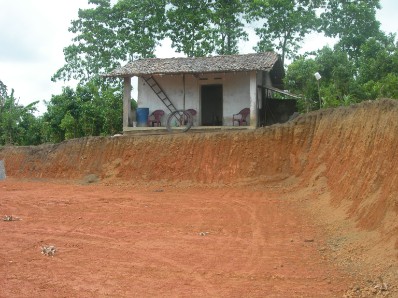
The Hut |
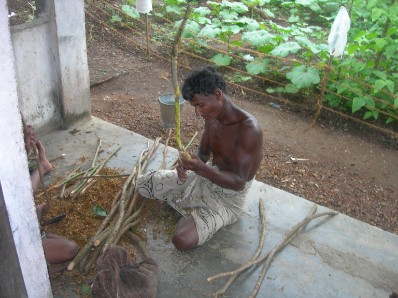
Uncle Cinn helping with the cinnamon before his vegetable patch dissapeared |
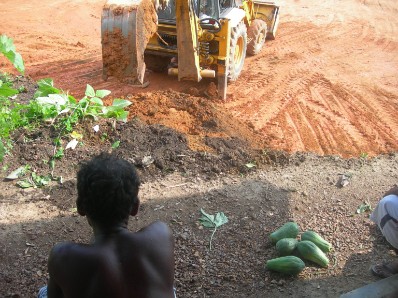
Unfortunately the veg patch did have to go
|
The original path through the cinnamon to the hut, people had started to use this path as some sort of short cut, so a barbed wire fence was erected on the far side of the hill, | 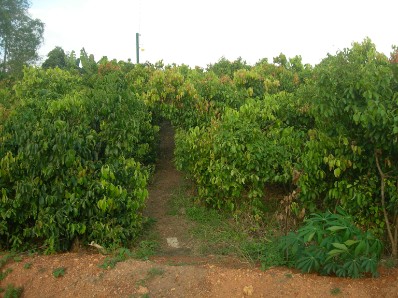 |
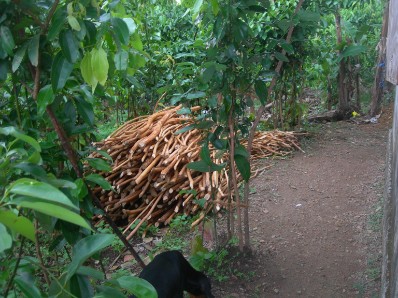 |
Just a few of the sticks that had been stripped of the cinnamon bark, very small commercial value of Rs 1 or 2 per stick, more useful as fire wood for cooking purposes, |
The stories that a visitor to Sri Lanka is likely to hear about “poor” cinnamon workers are likely to be far from the truth (see beach boy touts and tuk tuk) It is true that many cinnamon workers are poorer than many Sri’s but they have a skill that will always be needed and sometimes can even pick and choose who they work for, it is a family trade passed on to daughters as well as sons, it is quite frightening to see very young children using sharp tools but it is normal practice here, children are often seen playing with large knives and girls as young as 4 or 5 help prepare vegetables, | 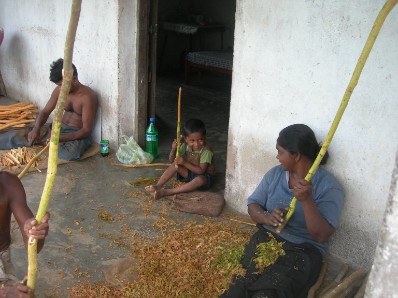
The lady and her son are scraping the outer bark, this is not used as cinnamon and is swept up, however a large quantity is produced and can be used as a compost / mulch, the man in the background is stripping the inner bark, this is the cinnamon sticks people buy, |
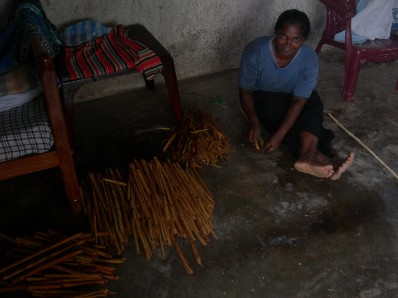 |
The lady is getting ready to make the “long sticks or quills” on her left is the measuring stick, directly on her right are small bits of cinnamon bark used as filling, the other pieces form the outside of the stick,
|
The workers arrive early in the morning, cut and trim the sticks for that days work and carry the sticks (often quite a distance) to the hut, local villagers usually arrive and take the gleanings, a breakfast break is usually next on the agenda, when they return work starts on stripping the bark, there are morning and afternoon tea breaks and of course a lunch break where lunch is either cooked on site or bought from home,
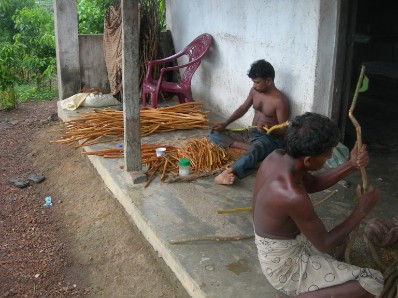 |
Uncle Cinn is stripping the outer bark the worker is gathering the usable cinnamon
|
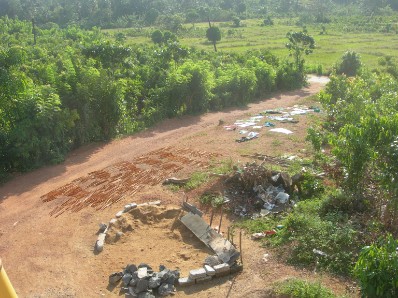 |
The largest pieces of inner bark are dried a little, and form the outside of the stick, smaller pieces are used as “stuffing” (I objected to Chathurika's family using my well and leaving their washing around, but technically they were entitled to) |
By overlapping and rolling together the “stuffed” sticks are cut to the trade standard length and left for a few more days to dry a bit more, the bark also curls up a bit tighter, | 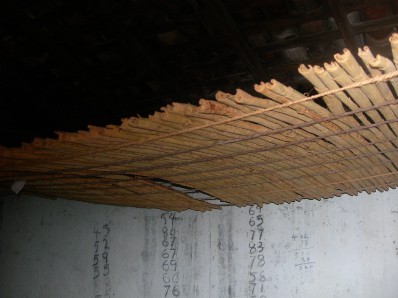 |
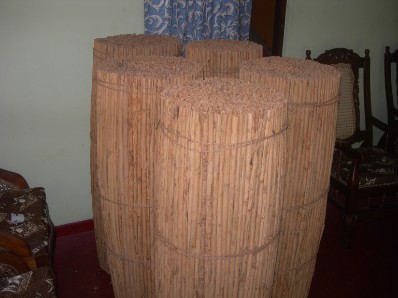 |
The finished sticks or quills are bundled together and weighed, the worker is very involved here as they get paid on a percentage basis, various buyers are contacted to try and find the highest price, the buyer arrives and weighs the bales and there are many disputes about the accuracy of the scales used, once agreement is reached on the weight the buyer then reduces the weight by x% for moisture content, (as these bales will be opened and thoroughly dried for export, often the sticks are completely dismantled and rebuild according to demand criteria) cash exchanges hands and the worker receives his 40% share,
The bales in the picture were sold for about Rs 20,000 each, and ergo the workers received about Rs 40,000 (£150 - £200) for all their work, |
This amount of cinnamon came from approx 3 acres of not well maintained (but recently fertilizer treated) cinnamon plants, there would be an average of 2 cuts a year depending on conditions, good maintenance produces more cinnamon but labour costs can outweigh the gain. To make a comfortable living (by European standards) 30 to 40 acres of reasonably well maintained cinnamon would be needed,
