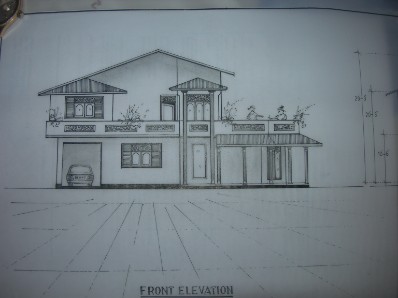
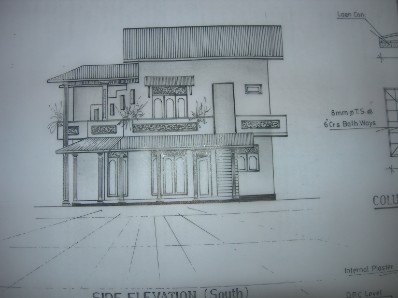
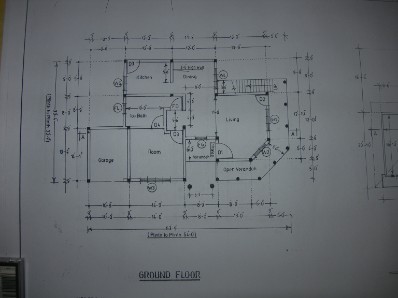
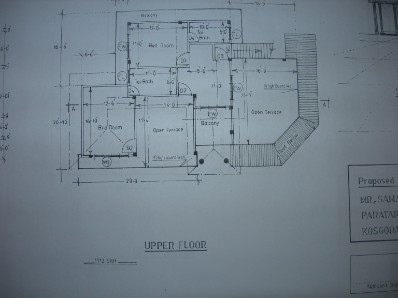
 | I forget how much I paid to have these plans drawn up, (as with so many things they were done in Saman’s name) doubtless I was over charged as per usual,
 |
The plans were drawn soon after I purchased the land and I was 100% trusting Saman, I had no idea that the land was already in his wife’s name.
 | 
Its only when you can look back on events that the big picture can be seen and I now have to believe that the architect knew all that was going on, |
First the cinnamon was cut and all the viable cinnamon was gathered.
Some villagers were allowed to take the small cinnamon branches, they go through all the bother of collecting the small amount available, I imagine the gleanings were for personal use rather than for sale, other twigs were gathered as fire wood 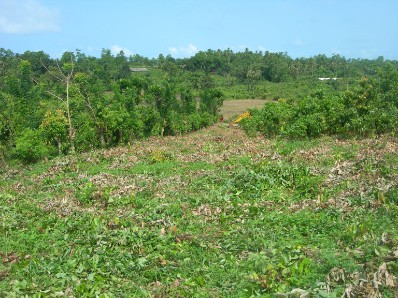 | 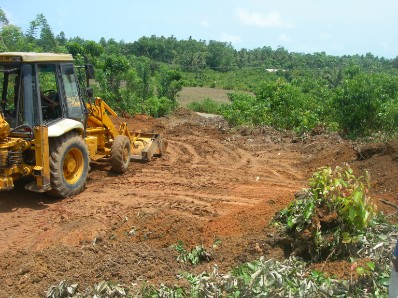
I was amazed at how cheap it was to hire the JCB, much later I found out that it is free, as every lorry load of soil taken away is sold, a friend who knew about this had land levelled and was paid per lorry load to leave site, |
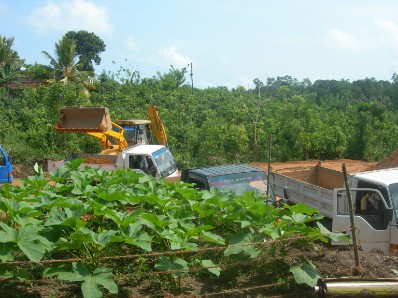
On the first day there were 6 lorries constantly on the go, |
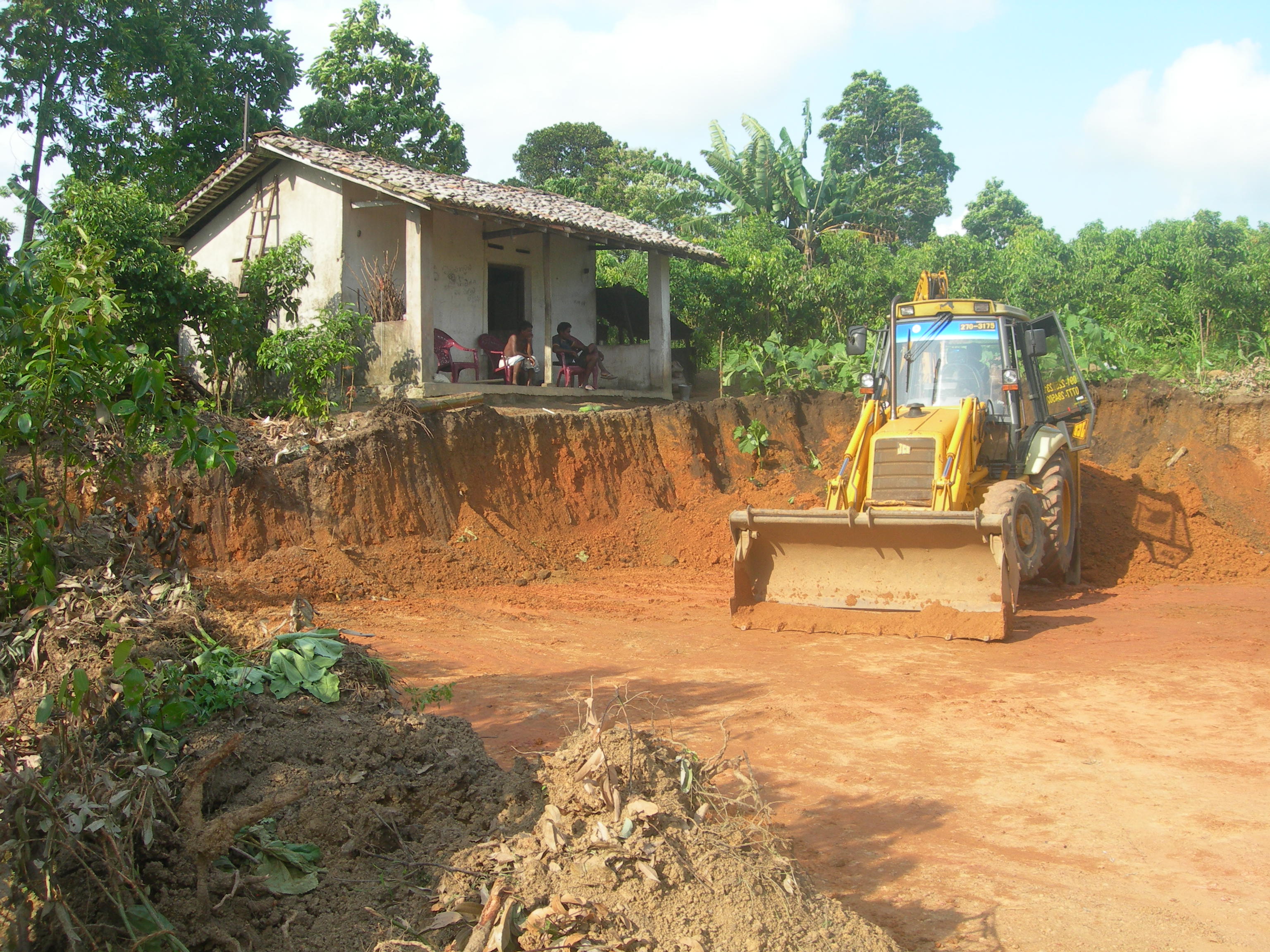
The JCB operator was very good, the site was not measured or marked out and the level was done by eye, the house fitted beautifully into the levelled area
 |
I went to all the bother of complying with Sri Lankan custom, the site was blessed, and good luck “jars” were buried at strategic points round the site,
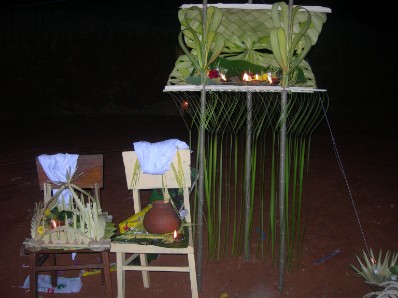
Someone had to be on site throughout the night hours for about a week and I even took a turn, | 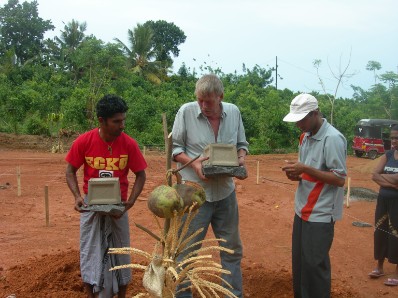
Saman and I both laid the foundation stones, they too were hollow and filled with good luck (rice, money, gold etc), the stones had to be laid at an auspicious time and I supplied all my birth details but the time must have been for the “real” owner who can be seen on the right of picture, the architect was timing events to the last second. |
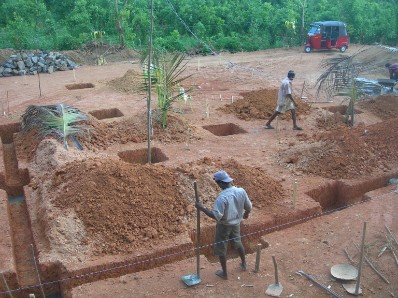
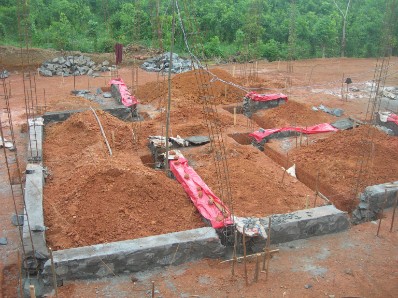
The foundations were started and one of Chathurika’s brothers (with some friends) helped by digging one of the bigger holes, I thought it was really nice of him to help but it is tradition that family help with the foundations even if they only dig a little. So he wasn’t helping me!
 |
 |
 |
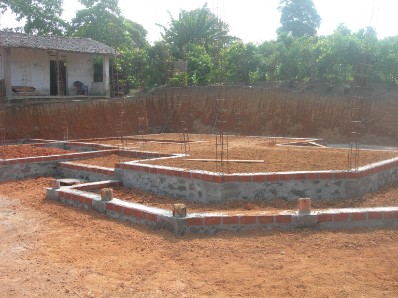
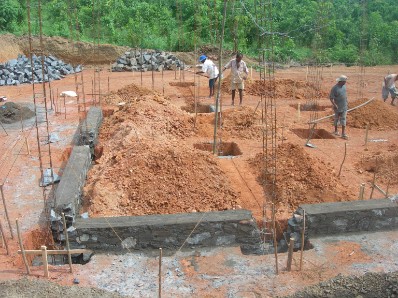
A course of bricks completed the foundations, all was done with a water level, the inside was then filled with the local soil as a dry fill,
|
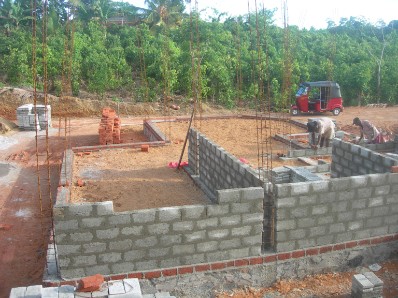
Being mostly block built construction was quite quick, but allowances had to be made for various days off and the weather was not always good,
 | 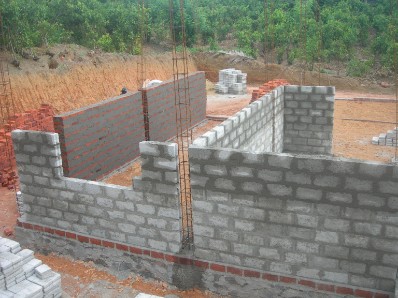
The brick walls were to keep the inside a little cooler as the morning sun warmed one side the other brick walls were built because of the size and quantity of windows in that area,
|
As the building progressed shuttering was nailed into place and concrete added, later all the uprights were tied together by horizontal reinforcing incorporated into the slab. |
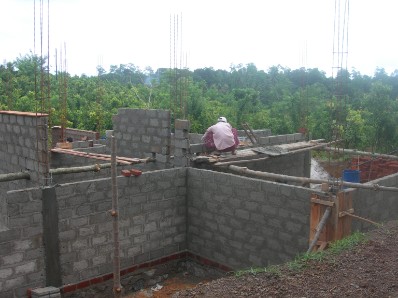 |
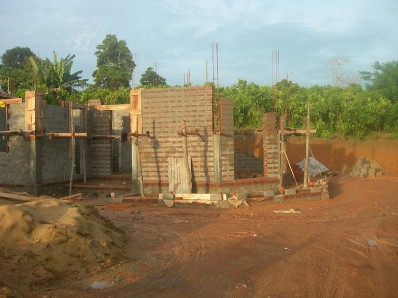
Reinforced concrete lintels were cast in place above each door and window |
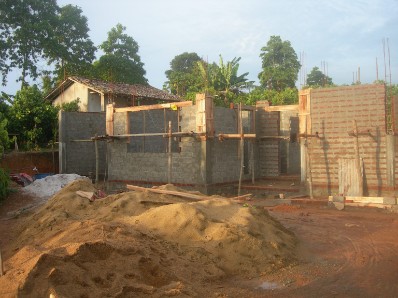
|
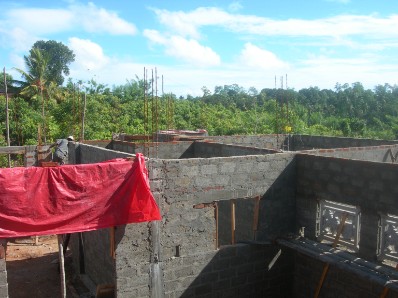
The ground floor walls progressed nicely, there was only one minor accident despite the workers being mostly barefoot and using precarious scaffoldings. |
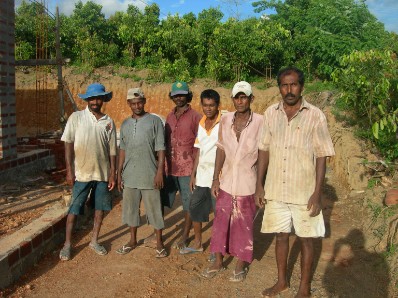
The builders were a good crew but liked a little party as each phase completed, as you can expect after the first party a few new phases were invented,
|
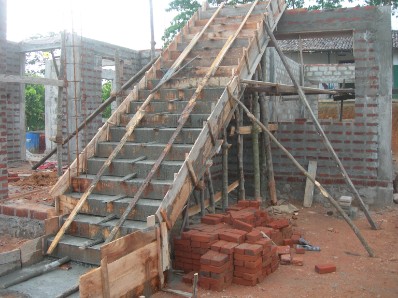
Stairs to upper floor, this staircase was external as the intention was to have 2 en suite guest rooms on this floor, though in the rough these were good even steps, I have used many stairs much worse, even in hotels and guest houses, |
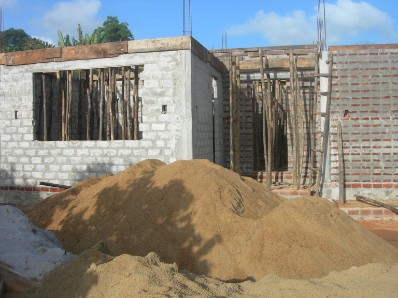
This shuttering was both sides of all the walls and basically raised the walls by 4 to 6 inches, this held the reinforcing that kept all the walls together,
|
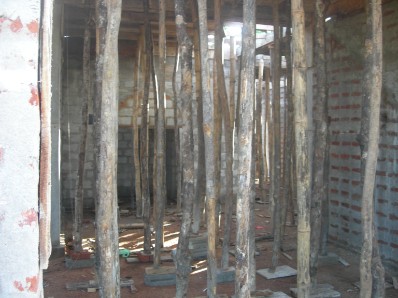
The framework is added, with many bamboo and timber supports, there is a lot of weight to be added.
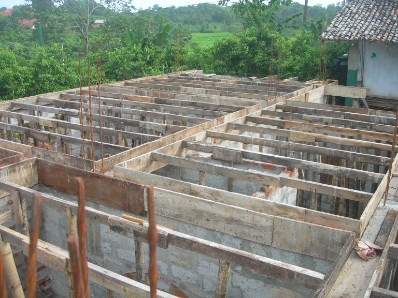 | 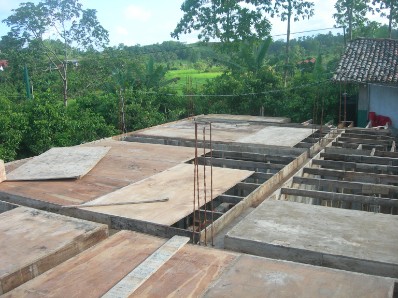
When the plywood is removed the concrete becomes the ceilings for below and the floor for above
|
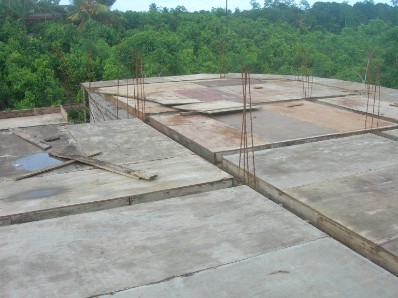
The "slots" are the areas directly above the walls, with reinforcing in place this becomes one large lintel linking all the walls together as well as being an integral part of the completed slab. |
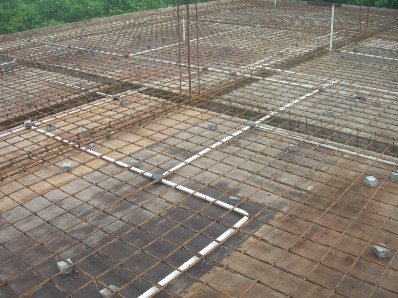
Now a lot more reinforcing, once again all made in situ.
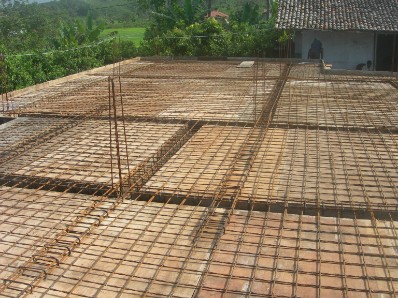 |
Next man on the job is the electrician who works out where all the wiring is to go
 |
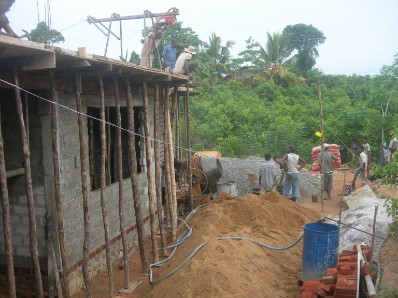
The slab team arrive late afternoon and they work amazingly, |
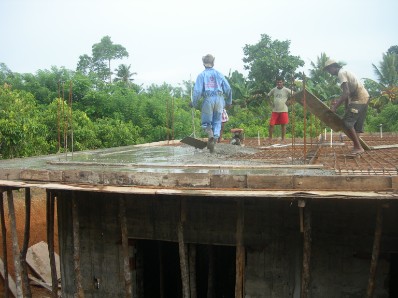
The entire slab was done in a few hours, all hand mixed using tons of sand, chippings and over 150 bags of cement |
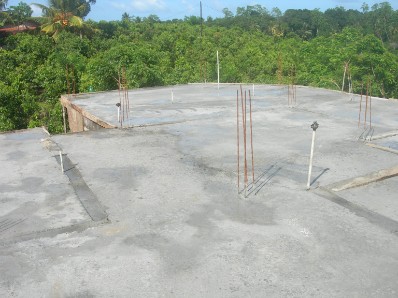
The slab was left for about 3 weeks before building work resumed
 |
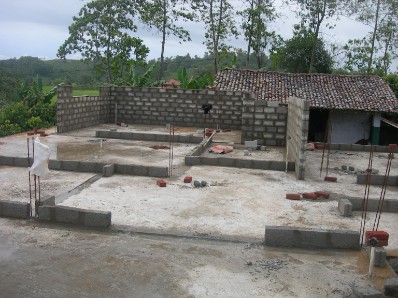 | 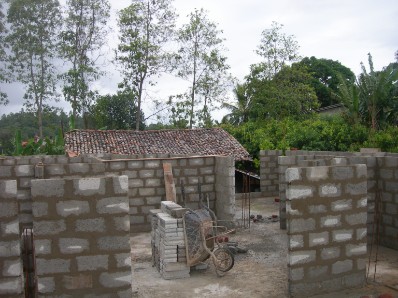 Construction was the same as the ground floor. |
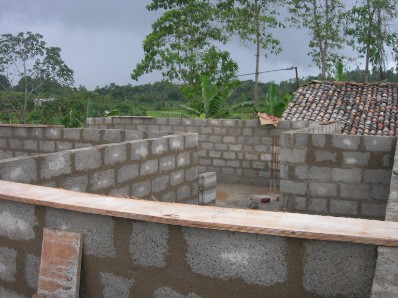 |
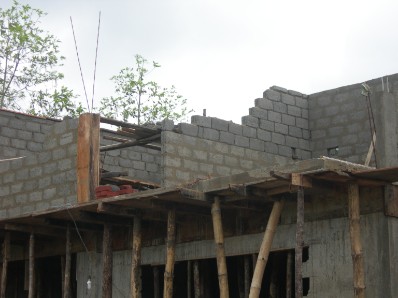
There were a few setbacks caused by the weather, it always seemed that the wind got up when it rained and on two occasions the driving rain was so heavy that the last built sections of walls that day came down. |
 |
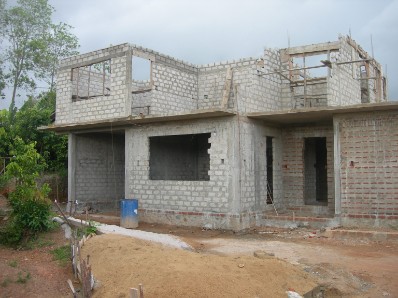 |
All the walls were again tied together by reinforcing that also became the lintels above the door and window frames,
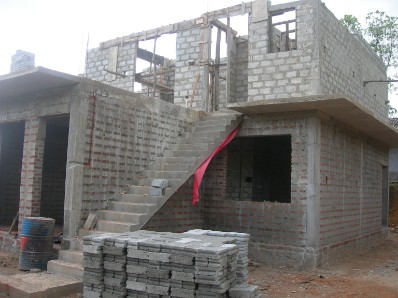
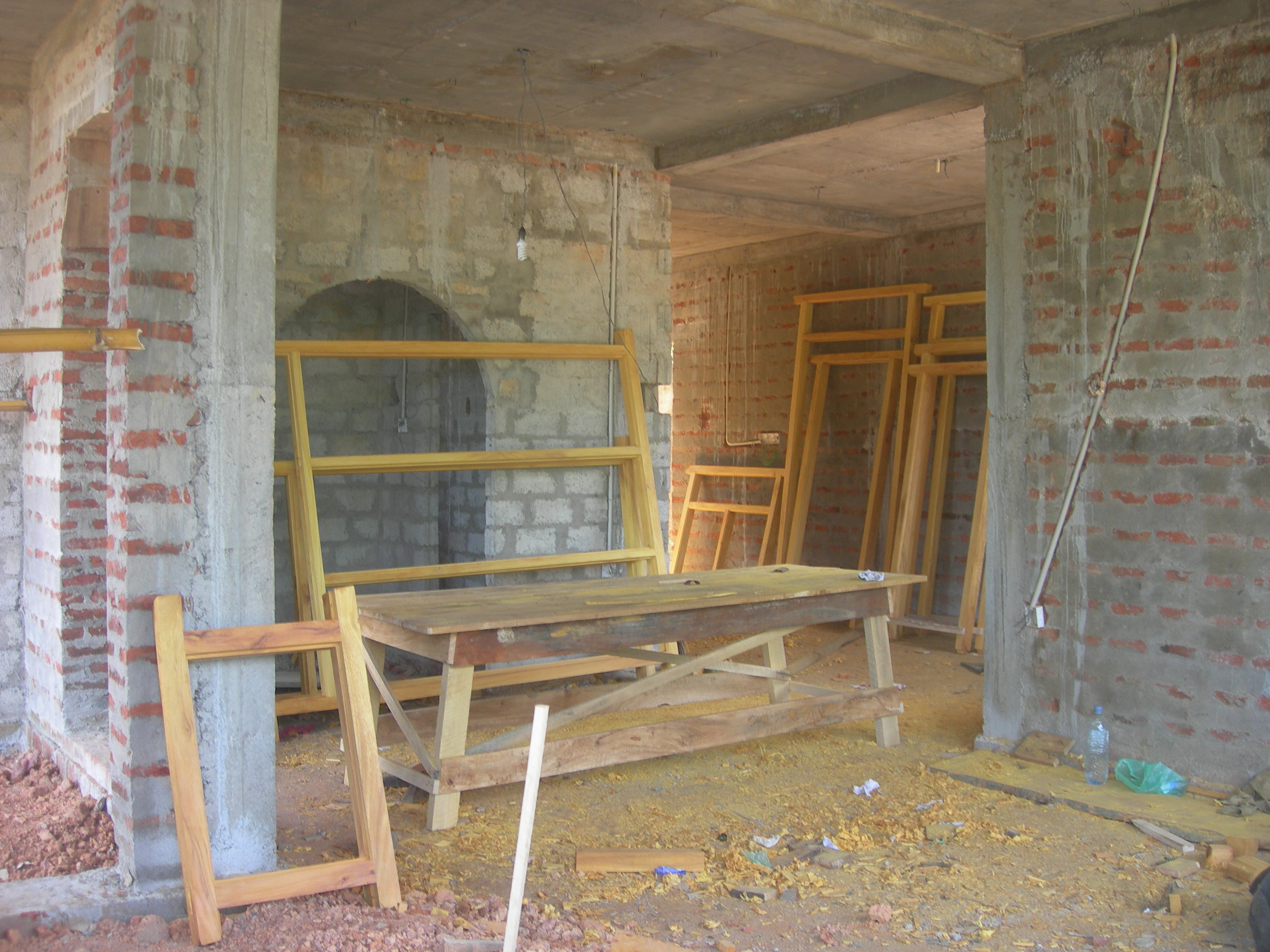
The carpenters were busy making up the door and window frames, all made from rough sawn timber, |
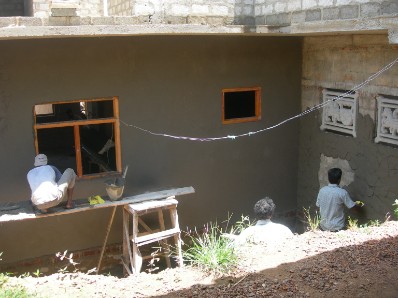
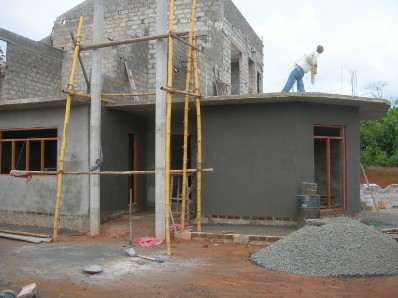
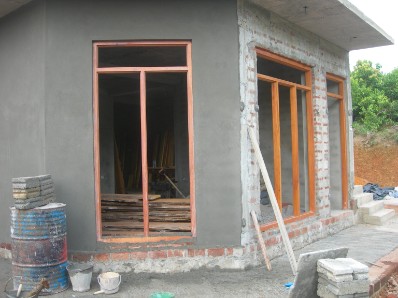
The walls were covered in a thick layer of cement “plaster” both inside and out,
The internal walls are later skimmed with a few coats of smoothing plaster ready for painting.
|
 |
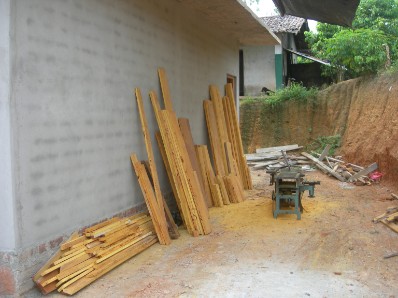
The carpenters did most of their machining out here. The frames were put together indoors,
|
 |
|
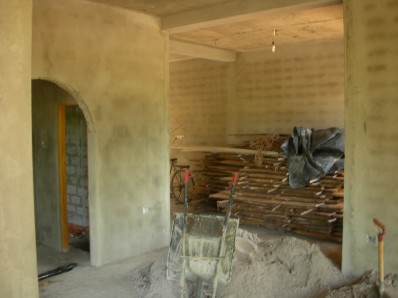
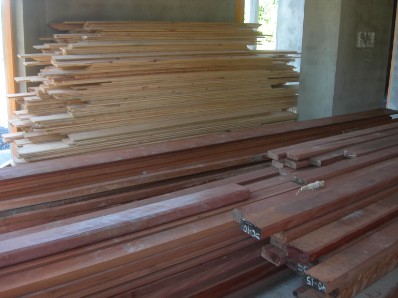
All the roofing timber was kept indoors for safe keeping until ready to use A night watchman was employed,
 |
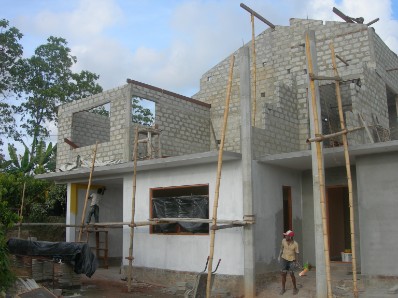
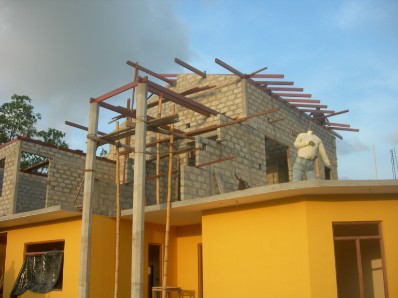
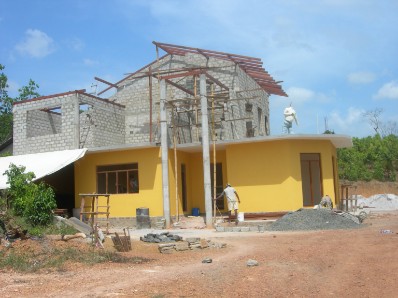
Painters were working on the out side of the building, the same painters were also preparing the finished timber for the roof supports and ceilings.
 | 
|
 |
The roof timbers were correctly spaced and later were cut to the correct length, the ends were cut true horizontal so barge boards could be added.
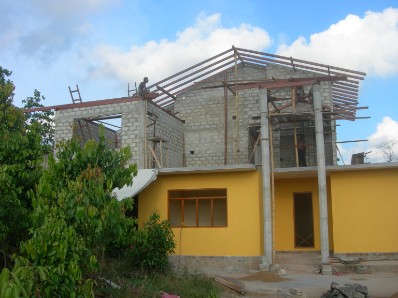 |
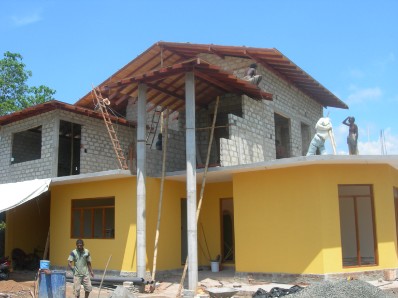
More timber framework is added so the corrugated sheets could be fitted.
|
The tongue and grooved timber had been well prepared, sanded and varnished 3 times, this becomes the ceilings of the upper rooms,
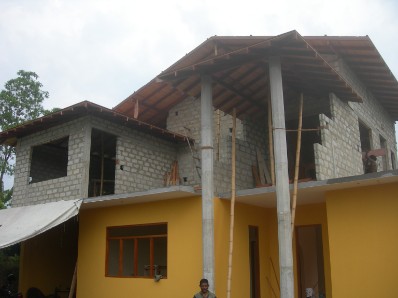 |
I had to leave before any roof tiles or guttering could be added, also I had effectively run out of money,
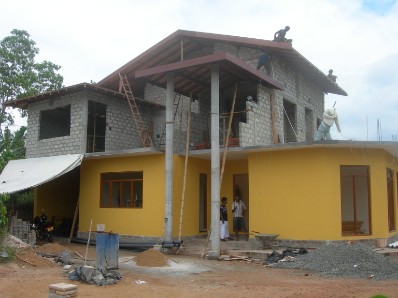 |
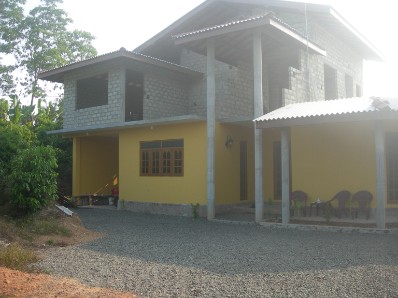
The ambition was to cover the corrugated sheets with tiles that are made to fit, thus improving the appearance of the building, |
Had there been enough money to fully complete the building then I believe that Saman and Chathurika would have delayed their “land grab”
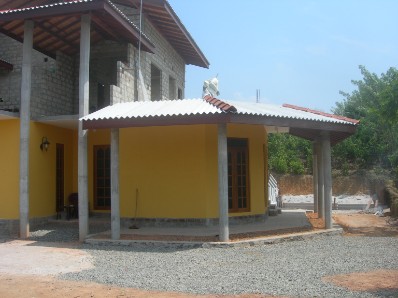 |
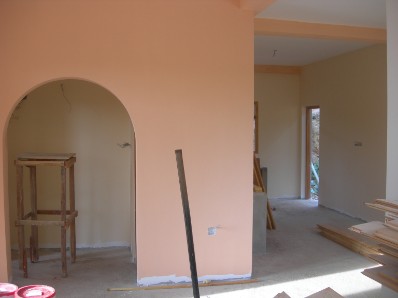 |
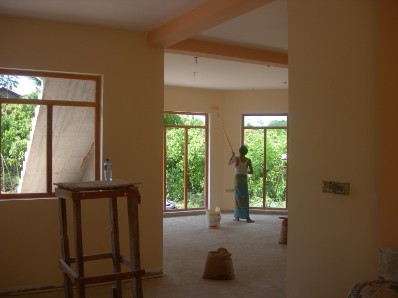
It can be seen in these pictures that the colour of the paint is not exactly true, but a very good job was done, I later met one of the painters and found out that a relative of Saman had his house painted at the same time, paint and labour courtesy of me.
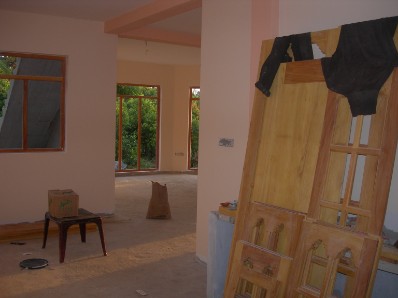 |
 |
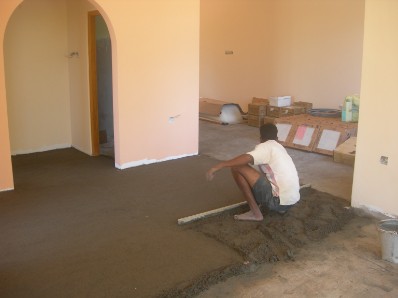
The dry fill was covered in plastic sheet then 2 - 3 inches of reinforced concrete, the floor tiler then added another inch or so making the floor very level, again water was used for levels |
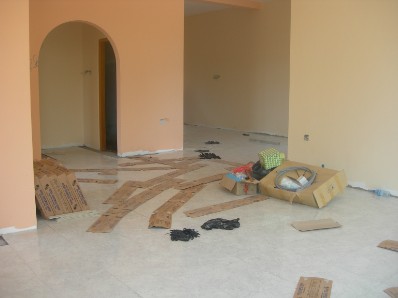
One style of tile was used throughout the ground floor except for the bathroom which had its floor 2 inches lower, this “wet room” effect is common to most Sri Lankan houses, |
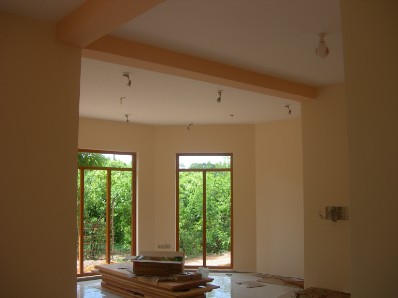
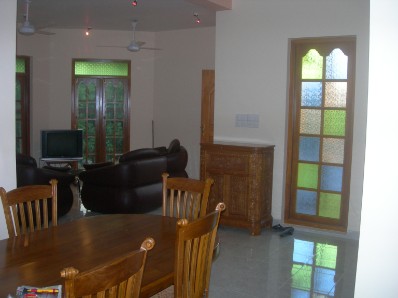
I had glass fitted above the other windows instead of wooden lattice or louvers, the wood is nice and allows for ventilation but lets in mosquitoes,
|
The multi coloured “window” does not open, as I did not want it used as an extra door,
 |
|
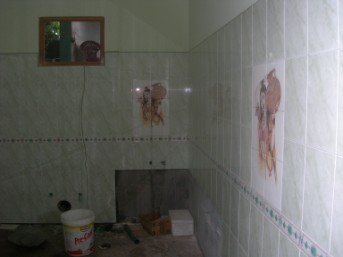
The wall tiles had 2 feature “water carrier” pictures |
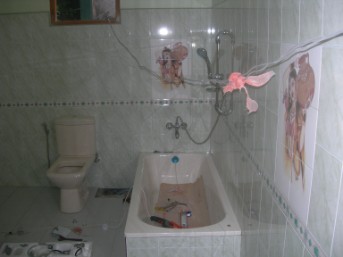
I really missed having a good bath as very few places had one, so I made sure one was fitted here, this feature alone makes the house European |
|
|
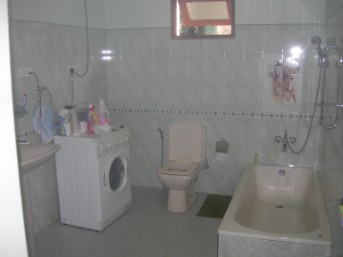
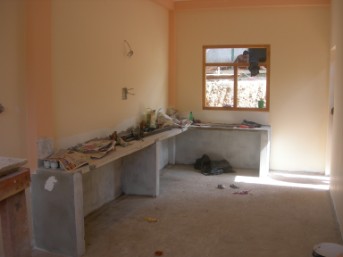
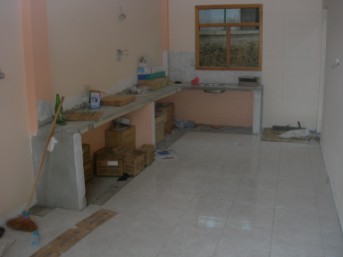
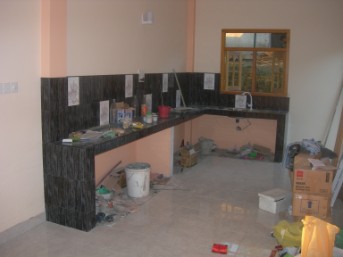
The worktop was made of reinforced concrete, then tiled. |
|
|
I was unable to fully complete the kitchen, built in cupboards under the slab would have been nice. |
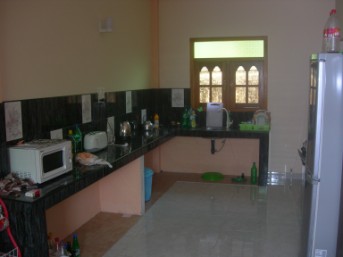
I had intended to complete the upper floor and all the furniture and electrical items were purchased,
